
LEARNING FROM THE MASTERS 01 / 11
Konstantin Stanislavski
for Musical Theatre
The System — from given circumstances to the first note. How the father of modern acting training solves the hardest technical problem in musical theatre: the moment a scene stops being spoken and starts being sung.
1863–1938 · Co-founder, Moscow Art Theatre · Author, An Actor Prepares
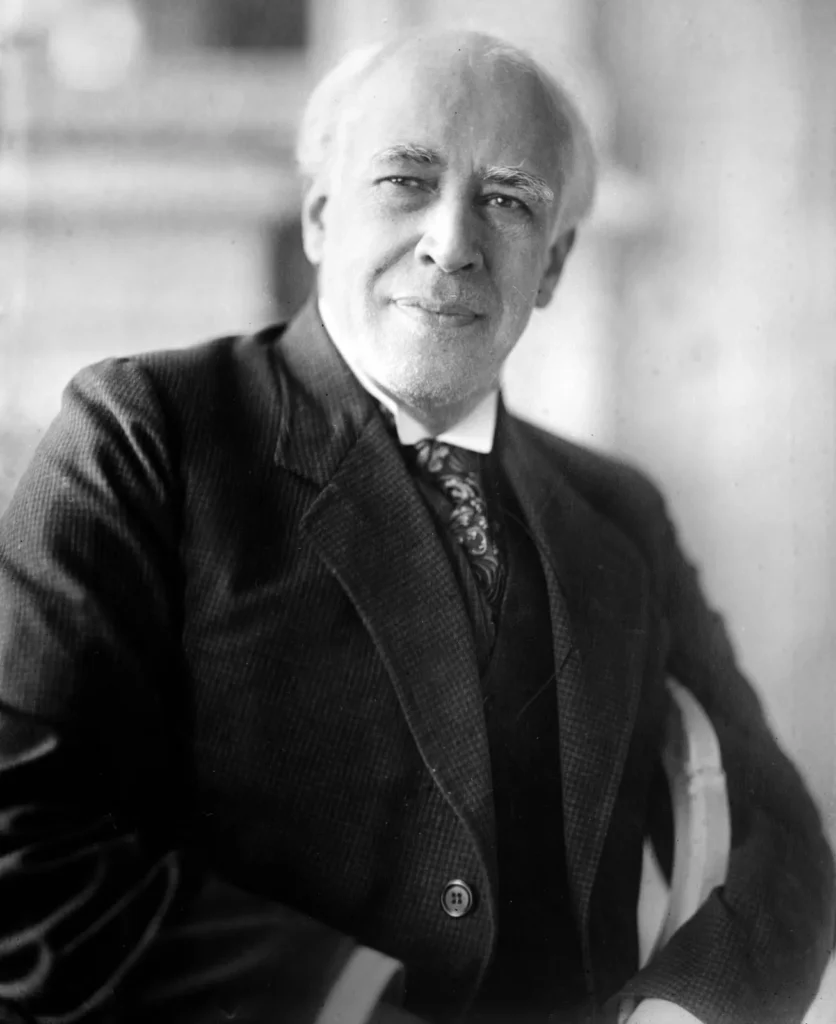
Konstantin Stanislavski techniques for Musical Theatre






THE METHOD
What Stanislavski Actually Built
Konstantin Stanislavski, co-founder of the Moscow Art Theatre, built the first systematic, teachable approach to psychologically truthful acting — what actors now simply call “the System.” Instead of asking performers to fake emotion, he asked them to build the specific conditions that make real emotion inevitable. His toolkit: Given Circumstances (the who, what, when, where, and why that define a character’s reality), the Objective and Super-Objective (what a character wants moment-to-moment and across the whole piece), Obstacles (what stands between the character and that want), Units and Beats (breaking a scene into playable segments, each with its own objective), the Magic If (“what would I actually do if I were really in this situation”), Subtext (the true want beneath the line), Tempo-Rhythm (a moment’s internal pace, independent of how fast it is spoken or played), and, in his later years, the Method of Physical Actions — building emotional truth through a sequence of specific, playable physical tasks rather than trying to summon feeling directly.
Nearly every major American acting technique — Strasberg, Adler, Meisner, Hagen — is a direct descendant of, argument with, or refinement of this system. For a musical theatre performer, that makes Stanislavski the trunk of the tree: everything downstream still answers to given circumstances, objectives, and obstacles. The difference is that almost none of it was written with a sixteen-bar vamp in mind.
The Application
From Scene to Song
In a play, a unit ends when the objective or the obstacle changes. In a musical, one of the most common unit changes is a modulation into song — and it is exactly the moment most performers get lazy. The instant the underscoring begins, many actors unconsciously reset: they drop the objective they were just playing, take a presentational breath, and begin the song as a fresh performance event rather than the next beat of the same fight. Stanislavski’s system says the opposite must happen. The vamp is not a curtain between scene and song; it is a rising given circumstance — the stakes just got too big for prose, so the character reaches for a bigger instrument. Practically, this means an actor should be able to name the exact objective and obstacle alive in the spoken line immediately before the first sung note, then sing that first phrase as the literal continuation of that same unit. Directors and music directors who understand this get songs that erupt out of behavior instead of songs that interrupt it — the difference between an audience thinking “oh, a song started” and an audience never noticing the seam at all.
“The vamp is not a curtain. It’s a rising given circumstance.”
The contemporary “I Want” song — and its cousin, the song where a character discovers what they want in real time — is Stanislavski’s Magic If set to a click track. Genuinely gifted musical theatre writers score the character’s thinking, not just their feeling, which means the actor’s job is to keep discovering the given circumstances line by line rather than performing a predetermined emotional color for four minutes. Rooted, sensory-specific imagining — what would I actually do, right now, if I believed I could survive without this — produces a far more dangerous, unpredictable performance than “sing it sad” or “sing it hopeful.” Equally useful here is Stanislavski’s concept of tempo-rhythm: the idea that a character’s internal pace can run completely independent of the external tempo. A ballad marked quarter-note equals sixty-six can conceal an internal tempo-rhythm of a full sprint; an up-tempo eleven o’clock number can conceal total interior stillness. Actors who only play the metronome sing accurately and say nothing. Actors who consciously choose an internal tempo-rhythm, and let it fight or align with the orchestration, are the ones an audience cannot look away from.
Contemporary scores repeat text constantly — choruses, vamps, dance breaks, key-change reprises of the same hook — and repetition is where untrained singers go emotionally flat or, worse, oversing to compensate. This is precisely the problem Stanislavski’s late-period Method of Physical Actions was built to solve: instead of trying to re-manufacture the same emotion on the fourth repetition of a line that the actor found on the first, assign each repetition a new, specific, playable action — a different transitive verb aimed at a different target: convince, warn, banish, claim — using the composer’s own escalating orchestration, key changes, and dynamic markings as the given-circumstance cue for exactly when the unit shifts. The lyric stays the same. The doing does not. This is also the fastest fix for the single most common note a musical theatre actor hears in callbacks and tech — “it feels like you’re just repeating the chorus” — because the actual problem is never vocal. It is that the objective never moved.
THE PRACTICE
Five Exercises for the Rehearsal Room
01 · The Vamp Bridge Drill
Speak the last line of dialogue before a song aloud. Name the objective and the obstacle in one sentence each. Then sing the first line of the song as the same unit continuing at higher stakes — no reset breath, no change of address, no “performance” attack. Repeat until the seam disappears.
02 · The Five Questions at the Downbeat
Before rehearsing a song, answer Stanislavski’s given-circumstance questions — who, what, when, where, why — for the exact instant right before the first note, not for the song’s overall story. Most actors can describe what the song is “about.” Almost none can say what is true in the room ten seconds before it starts.
03 · Prose First, Then Pitch
Speak an “I Want” song’s lyric as plain prose first, applying the Magic If in first person and present tense: “what would I actually do if…” Only once the imagining is sensory-specific — not general — return to pitch and rhythm with that same specificity intact.
04 · The Verb Ladder
For any repeated chorus or hook, write a new transitive verb for each repetition — convince, warn, banish, claim — aimed at a specific target, real or imagined. Sing through tracking only the verb changes. The text stays identical; the doing escalates with the orchestration.
05 · Tempo-Rhythm Under Tempo
Sing a ballad while performing an unrelated task with an urgent internal clock — timing a countdown, hiding something before someone returns — to decouple felt urgency from sung tempo. Then drop the task and keep the internal tempo-rhythm the physical action built.
THE EVIDENCE
Where This Already Works Onstage
Rent (1996)
“Take Me or Leave Me” — Maureen & Joanne
Two competing objectives collide in real time: Maureen wants unconditional acceptance without changing; Joanne wants the same in return. Nothing here is a duet about feelings — it is two units of dialogue, at war, that happen to be sung. Rehearse it as a scene first: what does each woman need the other to say by the end, and what does she do when she doesn’t get it.
Wicked (2003)
“Defying Gravity” — Elphaba
Elphaba discovers the Wizard and Madame Morrible have been using her; the super-objective of the entire show crystallizes mid-song. This is the Verb Ladder exercise in its purest form — every repetition of “I’m through accepting limits” needs a new target: first herself, then Glinda, then Oz itself.
The Last Five Years (2001)
“Still Hurting” — Cathy
Cathy opens the show at the end of the marriage, singing backward through time. The given circumstances have to be built with zero help from linear plot momentum — the Five Questions drill is not optional here, it is the only way in. Tempo-rhythm work matters too: grief that is not permitted to move fast.
Hamilton (2015)
“Wait for It” — Aaron Burr
Burr’s objective is control through patience, not passivity — “I am the one thing in life I can control.” The obstacle is Hamilton’s effortless momentum. This is a tempo-rhythm masterclass: the vocal line barely moves while the internal tempo-rhythm underneath is racing. Rehearse it by finding the sprint hiding inside the stillness.
Dear Evan Hansen (2016)
“Waving Through a Window” — Evan
Evan is alone onstage, which means the obstacle is entirely internal: his own belief that he is invisible. The Magic If has nothing external to react against here, so Prose First, Then Pitch is essential — without a sensory-specific answer to “what would I actually do,” the song collapses into generic sadness.
Waitress (2016)
“She Used to Be Mine” — Jenna
Jenna sings this immediately after Earl takes her savings — the given circumstance is a fresh, specific loss, not a general one. The eleven o’clock ballad is where actors most often oversing through repetition; the Verb Ladder keeps each “she’s imperfect but she tries” a new act of self-appraisal rather than a repeated feeling.
THE PRACTICE IS THE POINT
Stop rehearsing the song. Start rehearsing the seam.
Every singer in the room already knows their notes. What separates a performance an audience forgets from one they carry out of the theatre is whether the actor treated the song as a costume or as the truest thing the character could possibly do next. Stanislavski spent a lifetime proving that truth is not a talent — it is a set of specific, repeatable questions asked in the right order. Take one moment from your own book. Find the line before the vamp. Name the objective. Sing the first phrase as if nothing changed but the volume of the want. That is the whole method, and it is available to you the next time you open your score.
GO DEEPER
Ten Places to Study Stanislavski Further
- Stanislavski’s System — Wikipedia — full overview of every core term
- Stanislavsky System — Encyclopaedia Britannica — concise academic summary
- Konstantin Stanislavsky — Encyclopaedia Britannica — biography and historical context
- Konstantin Stanislavski — Wikipedia — life, Moscow Art Theatre, legacy
- The Stanislavski Method — MasterClass — practical, modern actor-training framing
- The Stanislavsky Technique: An Actor’s Guide — Backstage — industry-facing breakdown
- The Stanislavski Method — StageMilk — actor-training-focused deep dive
- Stanislavsky Method — EBSCO Research Starters — research-grade citation source
- An Actor Prepares — Wikipedia — Stanislavski’s foundational text, explained
- An Actor’s Work — Routledge (trans. Jean Benedetti) — the modern unabridged translation